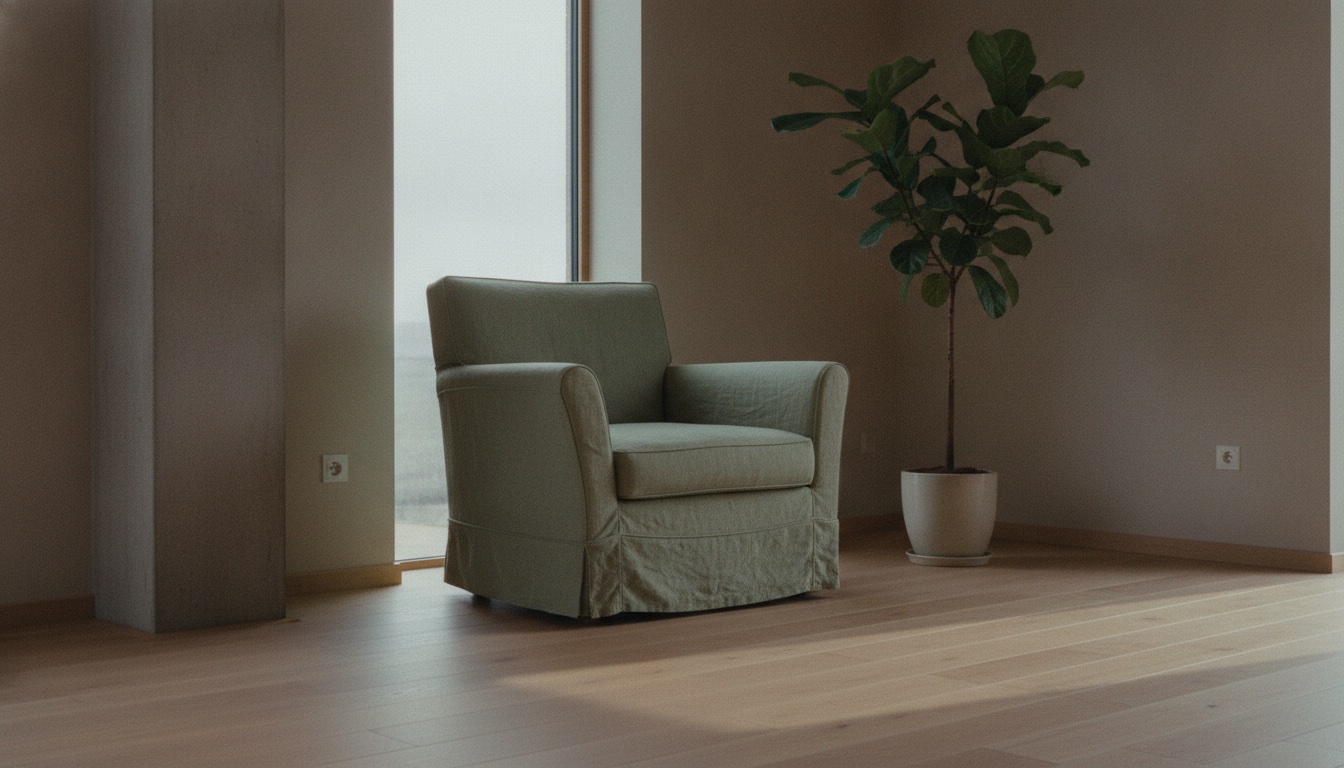
Relaxation is a learnable skill. Why your sofa doesn't actually relax you, and five mindful mini-breaks that do.
Hello friends,
Do you know this feeling: it's hard to break the wheel of constant "doing," and to stop being guided entirely by your calendar and your to-do list? Maybe friends have already started telling you to be less stressed, to take a little more time, to take it easy. They're not wrong, but either there isn't time to relax, or relaxing itself just doesn't seem to work.
I've been in this exact situation more times than I can count. Home on the sofa after work, ready to relax, and my head still full of thought circles that made "relaxing" not actually feel good. Often I'd start checking email, scrolling, or continuing the to-do list from the sofa, which only made things worse.
It's worth understanding that when your inside is running fast, your sympathetic nervous system, the activation system, is on and actively looking for more things to make you go faster. Often we're not even aware it's happening.
Picture yourself driving 200 km/h on the German autobahn. After a while at that speed, it starts to feel completely normal. But stop at a petrol station, get out, and watch the cars go by, and you'll notice how fast you actually were.
What makes constant performance even harder are thoughts like "I have to be valuable," "I have to be strong," "there's no time to relax," or "I don't deserve to just stop, that would be selfish." We often don't give ourselves permission to relax and slow down.
This can work for a few months, or even years. But at some point your body stops being able to take it. It can start with sleep problems, mild pain somewhere in the body, feeling easily irritated, or a general sense of being overwhelmed. Left unaddressed, illness can follow.
Relaxation is a learnable skill
To keep the metaphor going: imagine you never stopped the car, and just kept speeding through. Eventually the tank runs empty. I can't overstate how important real breaks are, whether that's weekends, holidays, or, more effectively in my experience, mini-breaks during the day.
A mindful mini-pause can be as simple as closing your eyes and taking ten conscious breaths. When you breathe slowly and consciously, your mind slows down and relaxes along with it.
Five more mindful mini-breaks
Self-care permission. Give yourself explicit permission to do nothing for even one minute. This is the actual prerequisite for relaxation. Without it, you won't be able to slow down even lying on the sofa for hours.
Meditation. Training your mind to focus where you want it prevents stress and keeps your brain vital. It's well documented that meditation leads to lower cortisol, the stress hormone, in the body. It also trains concentration and attention span, genuinely useful in a world built for constant distraction.
Body scan. Lie or sit down, close your eyes, and feel through your body part by part, starting with your toes, then ankles, then lower legs, and so on. Try to take out any judgment and just stay open to how each part feels. It can help to visualise breathing into each part as you go. Give it at least fifteen minutes.
Take a walk instead of lunch at your desk. Fresh air and the outdoors are free and quick tools for real relaxation. Mute your phone and let yourself actually take in your surroundings as you walk slowly.
Practice saying no. This might be the hardest one, but boundaries matter. Be honest with yourself: some meetings you attend don't get much from your presence, often because they're not well organised or don't have a clear division of tasks. Set yourself a limit per day, whether that's declining a meeting kindly but firmly, leaving early to give yourself ten minutes to walk to the next one, or stopping email after a certain time in the day.
Have a lovely day,


P.S. Mindful mini-breaks like these are part of the foundation we build in Module 1 of our 8-week Emotional Intelligence in Action programme. Discovery Call is at cal.com/sophie-bachmann/discovery-call when you're ready.