Emotional Intelligence in Action
Emotional intelligence training for corporate teams: eight weeks of live practice with tools to recognise, understand, and navigate emotions at work. Grounded in science. Built for practice.

"I'm just a bit stressed." That's where most conversations about emotions at work stop.
Underneath "stressed" is often something more specific: overwhelmed, resentful, scared, or just exhausted in a way a weekend won't fix. A healthy relationship with emotions is one of the most underestimated assets in professional life.
Often what looks like a stress problem is a self-leadership problem: how someone reads their own reaction before that reaction runs the room. Emotional intelligence is the skill underneath self-leadership, the ability to catch that moment early enough to choose.
In a fast-moving world where technological and social change is constant, strong emotional skills matter more than ever, both for individual wellbeing and collective performance.
Modern research shows that alongside IQ, emotional intelligence is a decisive factor in performance. When emotions are underestimated or ignored, employee engagement drops, burnout increases, turnover rises, and creativity stagnates.
The future of work depends on the ability to express and navigate emotions in healthy ways, creating thriving cultures built on collaboration, creativity, and wellbeing.
Innovation, respect, and satisfaction are up to 50% higher, and frustration, anger, and stress 30 to 40% lower, when leadership is emotionally intelligent.
Brackett, M.A. (2019): Permission to Feel.

The one competence AI cannot absorb.
AI is taking over analytical and routine work across every function. What remains, and what increasingly decides performance, is how people handle pressure, conflict, and each other. The World Economic Forum finds no substitution potential by generative AI for skills rooted in human interaction, such as empathy and active listening, and Deloitte's 2026 human capital agenda centres on building the human advantage.
Four outcomes of emotional intelligence at work.
More empathic collaboration
An empathic environment built on respect and appreciation helps team members contribute fully, support each other, and stay open to new ideas.
Greater creativity and innovation
Innovation thrives on psychological safety. Teams with strong emotional skills feel confident bringing new ideas and discussing them openly.
Better decision-making
Shortens the gap between a hard moment happening and being able to respond to it clearly. Priorities get sharper, procrastination drops, decisions come faster.
Increased resilience
People learn to recognise the early signs before pressure tips into overwhelm, and widen the range they can handle without losing their footing. Confidence grows from trusting their own read of a situation.
The effect reaches beyond the team.
Emotionally intelligent organisations benefit at every level, from individual contributors to leadership teams to customer relationships. Teams whose leaders build emotional intelligence deliberately adapt faster under pressure, develop their people further, and sustain performance longer than teams that don't.
Cote, S. (2014) Emotional Intelligence in Organizations.
- Higher employee engagement and wellbeing
- Better customer care and client relationships
- Diverse and inclusive organisational culture
- Agile and resilient organisation
Three core elements of Emotional Intelligence in Action.
The programme is built around the PIN Method™, Zen & Go's proprietary method for developing emotional competence deliberately, not by accident, in professional contexts.
To see where the three steps stand for you right now, take the five-minute self-check The Space Between.
What most people think emotional intelligence is
Controlling your emotions
What it actually is
- Perceive
- Investigate
- Navigate
Perceive
Mindful attention to what is happening inside: noticing body sensations, thought patterns, and emotional signals without immediately reacting. The foundation of interoception and self-awareness.
Investigate
Understanding how emotions shape actions, decisions, relationships, and thinking. Recognising stress reactions and personal patterns. Building the knowledge to work with emotions rather than against them.
Navigate
Acting with clarity: making conscious choices aligned with personal values, team wellbeing, and the good of the organisation. The place where insight becomes action.
A structured progression, not a one-off workshop.
Eight live sessions, two Open Office sessions, and a follow-up email after every session. Available in English and German. Up to 20 participants.
The eight-week format gives the material time to become practice. Participants apply what they learn between sessions, in real situations at work, until it turns into embodied knowledge rather than theory.
-
Mindfulness and Emotional Intelligence
The foundations of EI, interoception, and the 90-Second Rule. Practical tools: body scan, mindful awareness.
- Follow-up email: one-pager, reflection exercise, and one tool for the week
-
Emotions 101
What emotions are, where they come from, and why they matter. Primary emotions through Ekman and Plutchik.
- Follow-up email: one-pager, reflection exercise, and one tool for the week
-
Functions and Types of Emotions
How emotions serve us: their protective, emotional, and social functions. Emotion types and the Orloff framework.
- Follow-up email: one-pager, reflection exercise, and one tool for the week
-
Naming Emotions
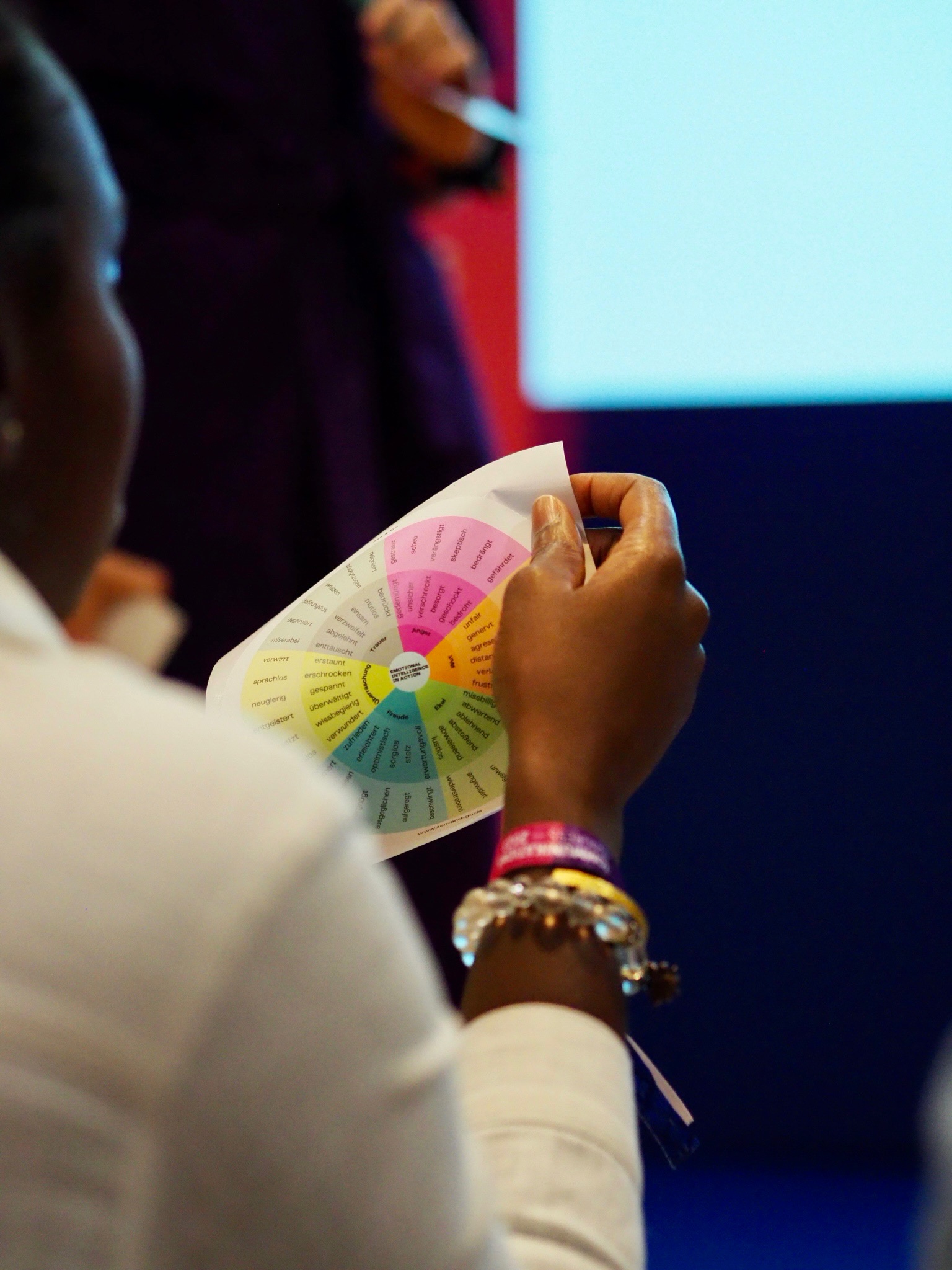
Developing emotional granularity: the difference between "stressed" and what is actually present. The Wheel of Feelings.
- Follow-up email: one-pager, reflection exercise, and one tool for the week
-
Open Office
A drop-in session halfway through: individual questions, real situations from work, space to practise.
-
Strengths and Shadows of Emotions
The Feeling Compass by Dittmar. Every emotion carries both gifts and shadows, and learning to work with both.
- Follow-up email: one-pager, reflection exercise, and one tool for the week
-
Healthy Emotion Navigation
Practical emotion regulation tools: the RAIN method, healthy expression, and working with difficult emotional states.
- Follow-up email: one-pager, reflection exercise, and one tool for the week
-
Vulnerability and Communication
The vulnerability spectrum and Undeniable Speaking: authentic emotional communication that builds trust rather than breaking it.
- Follow-up email: one-pager, reflection exercise, and one tool for the week
-
Empathy and Safe Spaces
Empathic listening, creating psychological safety, team check-ins, and the Balcony Moment as a leadership practice.
- Follow-up email: one-pager, reflection exercise, and one tool for the week
-
Open Office
A final drop-in after the last session: individual questions and how to keep the practice going.
What sets this programme apart.
01Weekly email with one-pager
Weekly email with one-pager
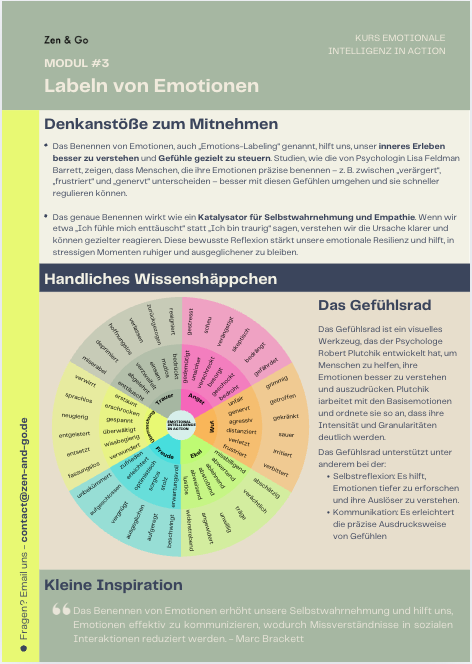
After each session, participants receive a follow-up email with a one-pager for integration. Key learnings, a reflection exercise, and one tool to use between sessions. By the end of the programme, participants have a complete personal knowledge collection.
02High-interaction live sessions
High-interaction live sessions
Sessions go well beyond presentation. Breakout rooms, guided exercises, group reflections, and team practices. Participants do the work together, not just watch it. Open-office sessions are available for deeper questions.
03Aesthetic companion materials
Aesthetic companion materials
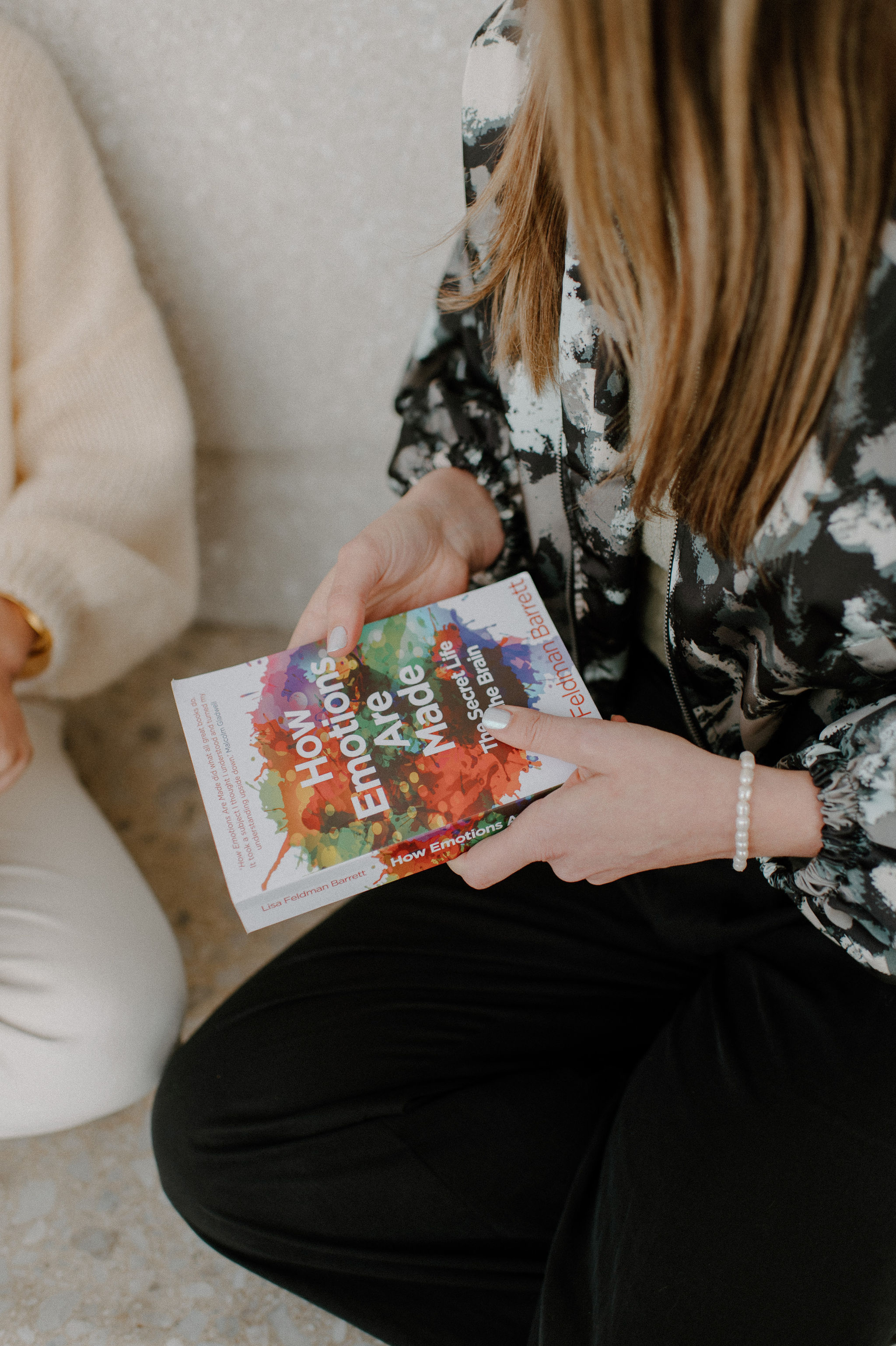
Beautifully designed blueprints, templates, and tools participants actually want to keep. The Wheel of Feelings, the Feeling Compass, team check-in cards, the RAIN method, mindful listening guides, and more.
041:1 email support
1:1 email support
Participants can write to Sophie directly throughout the programme, Monday to Friday. Questions between sessions, reflections that come up during the week, or simply wanting to go deeper: the door stays open.
Digital companion Coming autumn 2026
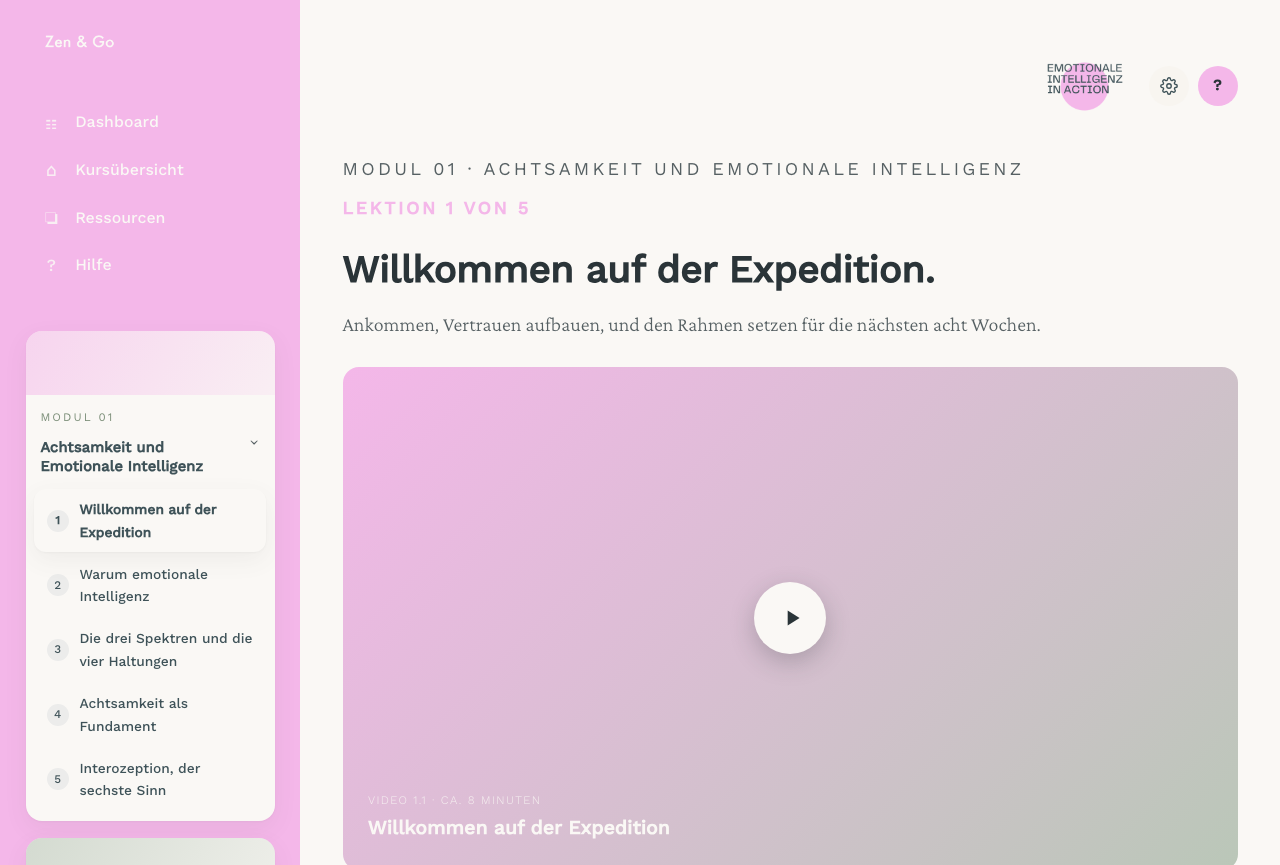
A digital layer is taking shape between the eight live sessions, on the same weekly rhythm as the programme itself: short videos, exercises, and a personal logbook for the time between sessions. Not a separate product, a standard part of every cohort once it launches.
So, what if we don't invest in emotional intelligence?
01Sick leave rises.
Stress that isn't named or processed accumulates. Burnout follows. The cost of one long-term absence typically exceeds the cost of a full programme.
02Conflicts go underground.
Without shared language for difficult emotions, teams avoid hard conversations. Problems don't disappear; they resurface as disengagement, passive resistance, and attrition.
03Your best people leave.
High performers leave managers, not companies. Emotional intelligence deficits at the leadership level are a primary driver of voluntary turnover among top talent.
04Leadership credibility erodes.
Teams watch how leaders handle pressure. Reactive behaviour, poor listening, and emotional unavailability signal to teams that their wellbeing is not a priority.
05Goals get reached. Bridges get burnt.
Purely rational, task-focused teams can deliver results, but often at the cost of trust. Relationships fray without anyone noticing. Culture erodes. And people stop bringing their full selves to work, even if they never leave.
Two formats. One methodology.
8-Week Online Journey
- 8 live online sessions (6 x 60 min, opening and closing 90 min each)
- Weekly email with exercises and one-pager for integration
- 8 one-pagers that become a personal knowledge collection
- Resource library with templates and companion materials
- Continuous email support, Monday to Friday
- Two open-office sessions for individual questions
- Group size up to 20 participants
- Available in English and German
2-Day On-Site Intensive
- Two full days of training at your location
- Resource library with templates and companion materials
- Customised discussion questions for individuals and groups
- Group size up to 20 participants
- Tools for emotional team check-ins
- Available in English and German
A version built around your organisation.
The programme can also be tailored: focus topics, examples, and format shaped around your team, your industry, and your goals. We work out what fits together in the discovery call.
What the data shows.
Emotional Intelligence in Action has run at Siemens Healthineers since 2023. The figures come from participant feedback collected at the close of the 8-week programme.
What participants say.
"Sophie and Dela convey the world of emotions, and above all their power, in a way that is authentic, structured, and inspiring. The combination of solid theory and exercises that fit into everyday work makes everything directly applicable. I now have tools to understand my emotions, place them, and put them to work for me. Your own emotional world changes noticeably, and with it the way you deal with other people. A course that enriches, has a lasting effect, and that I recommend without reservation."

"Thanks to the course, I got to know myself better and was able to practice tools that continue to help me deal with difficult situations at work. I notice that my skills and performance improve as a result."
"Thank you for the wonderful Emotional Intelligence programme and the journey it took us on over eight weeks. Even when the sessions were demanding and intense, you always created a warmly safe space. I am taking away many impulses for both my professional and personal life. Because whatever we do: our emotions are always there, both a curse and a gift."

"Emotional intelligence is a topic on which I also took other courses, but in this case the experience has been very tangible, personal, pragmatic and enlightening. Today, I pay more conscious attention to my feelings, to my own energy and its effects on my mental and physical well-being."

The team.
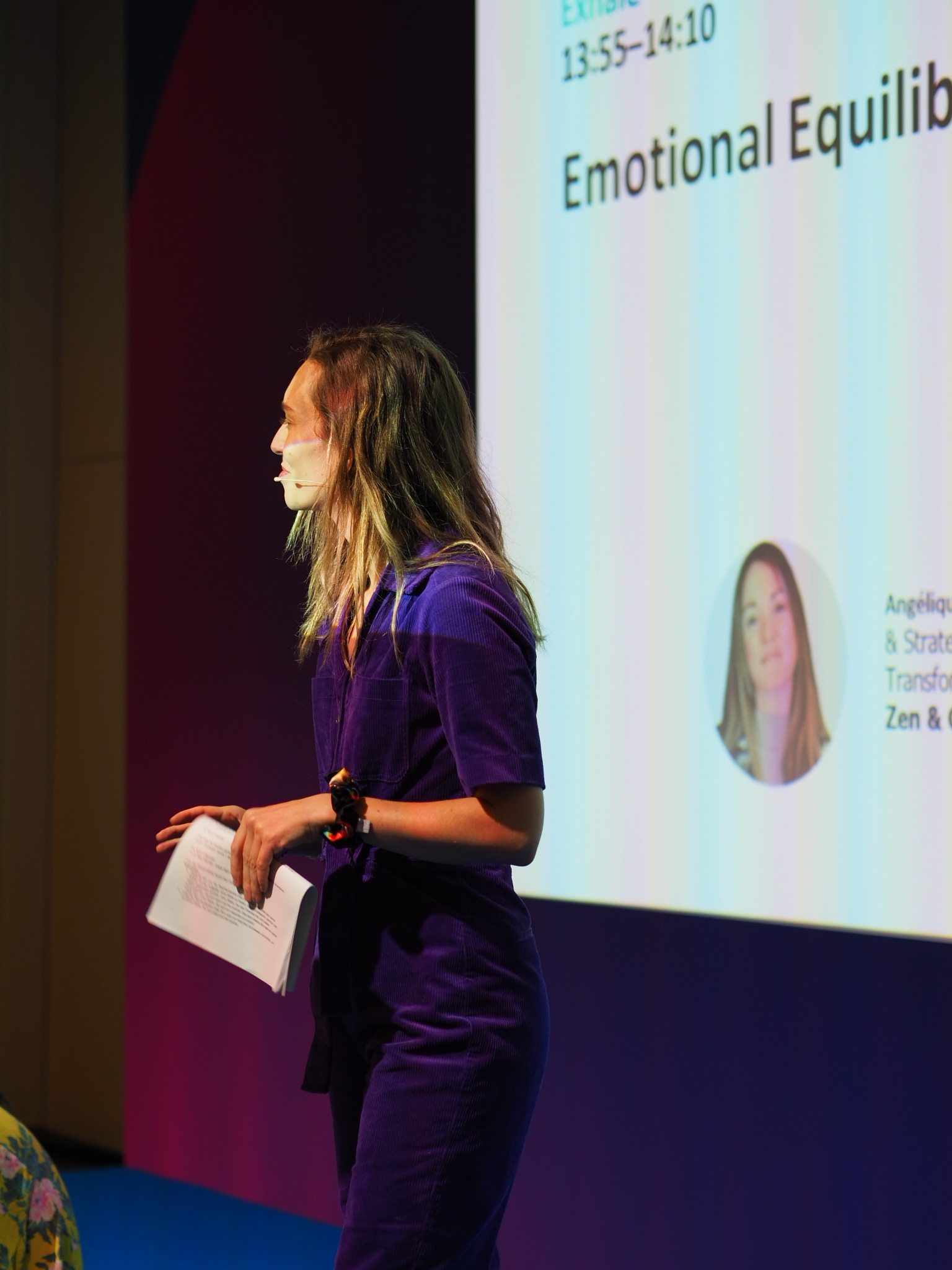
Each cohort is led by Sophie Bachmann and co-facilitated by one of our certified programme trainers.

Sophie founded Zen & Go in 2019 and has since worked with over 30 DAX companies and SMEs across the DACH region, USA, and APAC. She brings over 500 hours of workshop experience in mindfulness, emotional intelligence, and stress management for corporate teams.
Her approach is grounded in science and built for practice: tools participants actually use, not theory they leave behind. The PIN Method™ is Zen & Go's framework for inner-world development in professional contexts, developed by Bachmann together with Zen & Go's Angélique Heyder.

Six years of innovation consulting at Fortune 500 companies in New York. Certified embodiment coach. Creates spaces for authentic growth and brings depth of facilitation experience to the group processes and somatic dimensions of emotional intelligence work.

Yoga and meditation teacher, clinical hypnotherapist, and women's circle facilitator with nearly 10 years of practice. Creates spaces that move people from head into body, from tension into presence. Integrates somatic awareness, Reiki, and ritual.
Frequently asked questions.
Does emotional intelligence training actually work?
Which problems in our organisation can emotional intelligence training address, and how do we see the effect?
Our team argues a lot or avoids conflict. Is emotional intelligence training the right fix?
Is this only for improving my own emotional intelligence, or does it help with a difficult boss or colleague too?
Can the programme be customised for our team?
How do you keep attendance high over eight weeks online?
We only have 60 minutes per session. Is that enough?
What if someone misses a session?
Do participants need prior experience with mindfulness or emotional work?
How much does this require from us as an organisation?
Ready to bring this to your team?
Discovery calls are 30 minutes with Sophie. A direct conversation about your team, what they are facing, and whether this programme is the right fit.
Book a discovery call Or write to: contact@zen-and-go.de